A localized defect with a sound base
A compatible repair can address the opening when the nearby covering, attachment and underlying material are suitable. The repair must connect to that sound material rather than to a failing old patch.
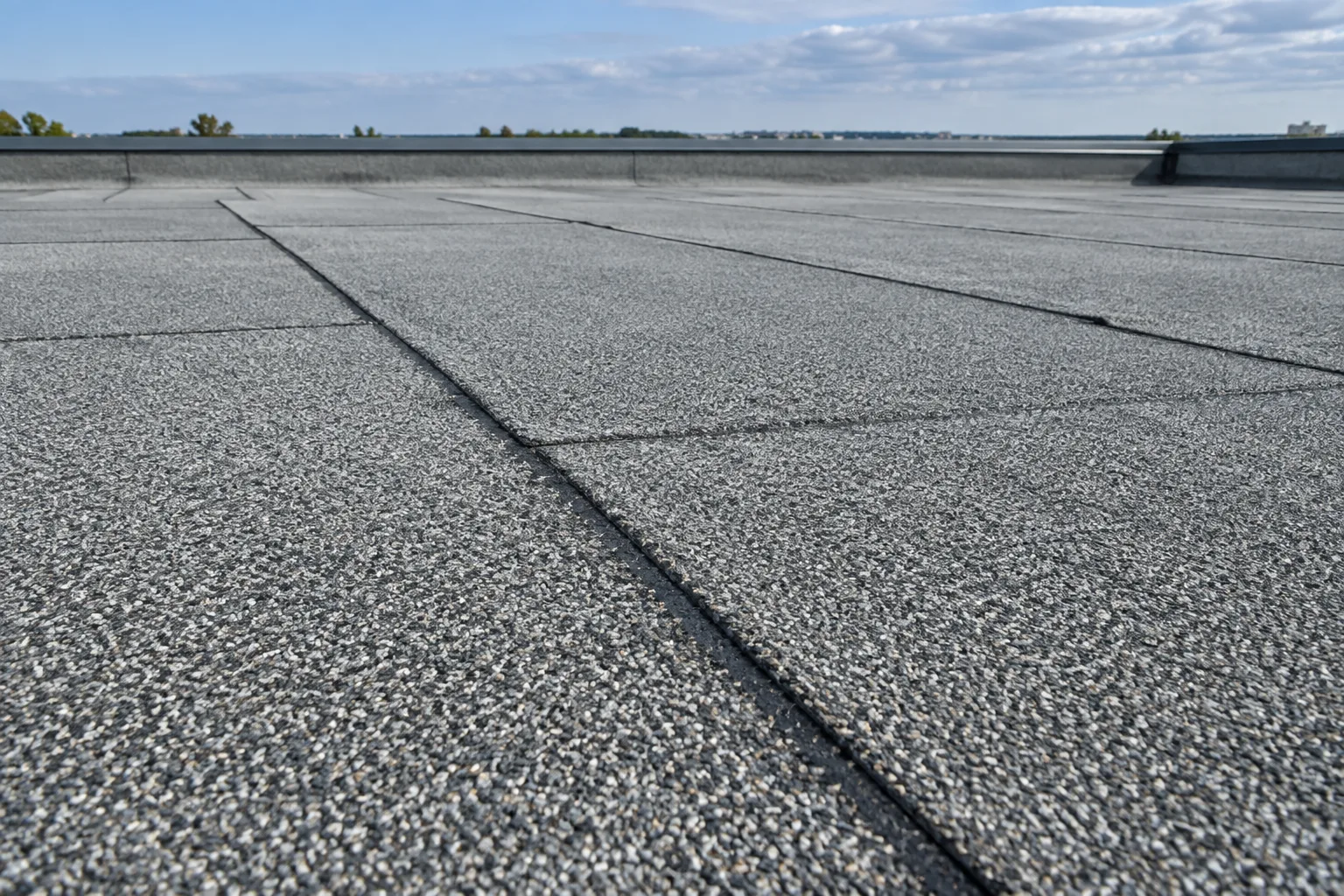
A ceiling leak can start at a seam, a drain or a curb some distance away. Flat-roof repair needs to find that entry point, determine what is wet beneath it and leave the surrounding roof able to keep doing its job.
Free roof inspections. Clear repair and replacement options.
An open detail can admit water into insulation or along the deck before it appears inside. A patch that closes the visible hole can leave that wet material in place. The inspection therefore has two questions: where is water entering, and how much of the assembly has been affected?
Surface appearance alone does not settle the second question. Where moisture is suspected, a more detailed assessment or selected sampling can be needed to establish the limits. That work is scoped to the building and system. It should inform the repair instead of being replaced with another layer over the stain.
| Roof detail | What a lasting repair must address |
|---|---|
| Open seam or lap | The membrane type and sound material around the opening determine the compatible seam repair. |
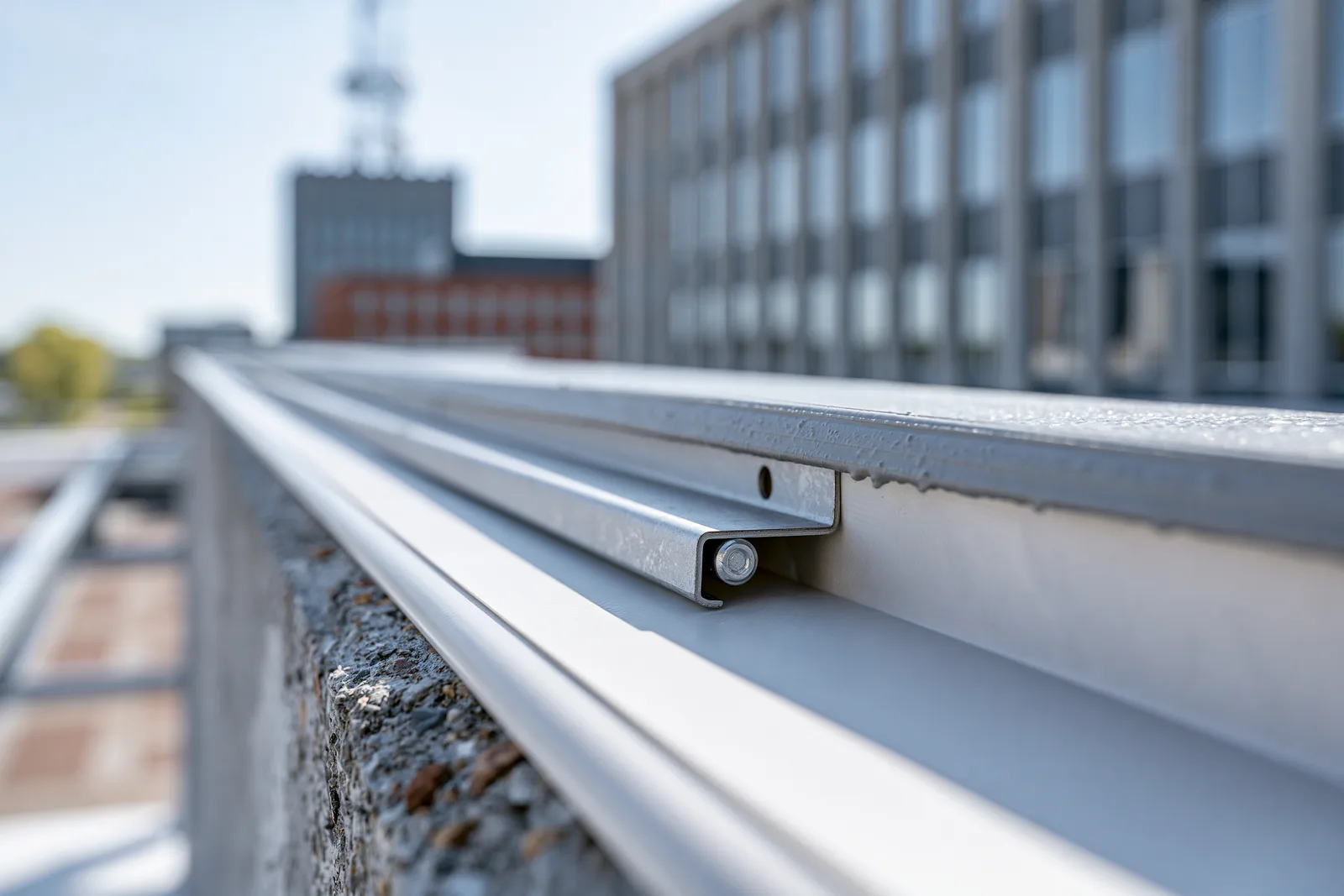
| Equipment curb or penetration | Flashing has to connect the field membrane to the vertical detail. A loose corner and a failed termination are different repairs. |
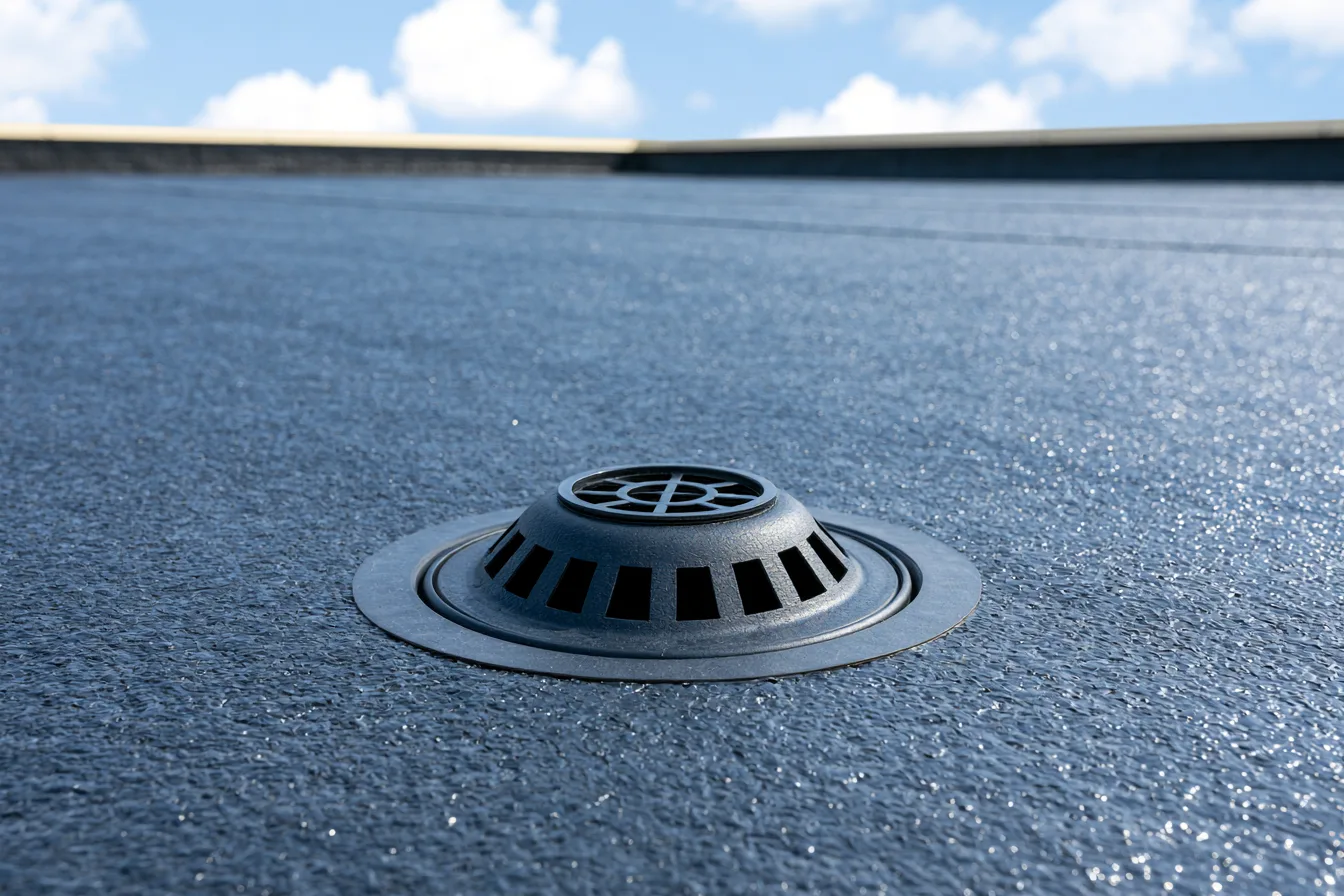
| Drain or scupper | The opening, its flashing and the route water takes to reach it need attention. Clearing debris does not correct an unsuitable roof slope. |
| Perimeter and wall transition | Edge metal, attachment and the membrane-to-wall connection need to remain part of a continuous water-control detail. |
| Soft or wet area beneath the covering | Affected insulation or decking changes the repair depth and boundary, even if the surface opening is small. |
A compatible repair can address the opening when the nearby covering, attachment and underlying material are suitable. The repair must connect to that sound material rather than to a failing old patch.
The work can extend into removing affected layers and rebuilding a defined section. The transition back to retained roofing is part of the scope, not an afterthought.
Repeated failures, extensive moisture or an unsuitable assembly can change the project toward larger replacement work. Covering the surface does not resolve the condition below it.
Review commercial roofing optionsWater needs a route off the roof. If the problem includes a blocked drain, a failed drain connection or a low area holding water, the repair has to distinguish those conditions. They do not all need the same remedy.
A new patch or coating does not change the deck's shape. Drainage correction can involve the roof assembly or a separate design question, depending on the building. The proposed work needs to explain that boundary so a surface repair is not expected to solve a different problem.
The interior leak location and what the occupants noticed give the inspection a starting point. Tracing the roof entry remains the roofer's job.
The covering, existing repairs, attachment and signs of moisture determine what can be retained. Any further investigation needed to define hidden conditions belongs in the scope.
Material handling, roof access and protection of occupied space need to fit the site. Rooftop equipment and any connected trade work need clear boundaries before roof work begins.
Yes, when the defect is local and a compatible repair can connect to a sound assembly. The inspection needs to establish the surrounding condition and any wet material, rather than using the size of the ceiling stain as the repair size.
A restoration coating needs an eligible roof and prepared details. It is not a substitute for defining and removing affected wet material or resolving a failed connection.
The roof-coating page explains that eligibility decision.
No. A flat commercial roof has different membrane, insulation, flashing and access requirements. Its repair budget needs a scope for that building.
Include the property address and any system information already available. The roof type and work needed must be established before a system-specific project is arranged.
Tell us where water is appearing and how the building is used. A free roof inspection starts the discussion about the entry point and the work around it.
(405) 467-3350