A compatible local repair
A defined defect can be repaired when suitable surrounding membrane and a sound base remain. The repair method follows the actual system, not simply the color of the old sheet.
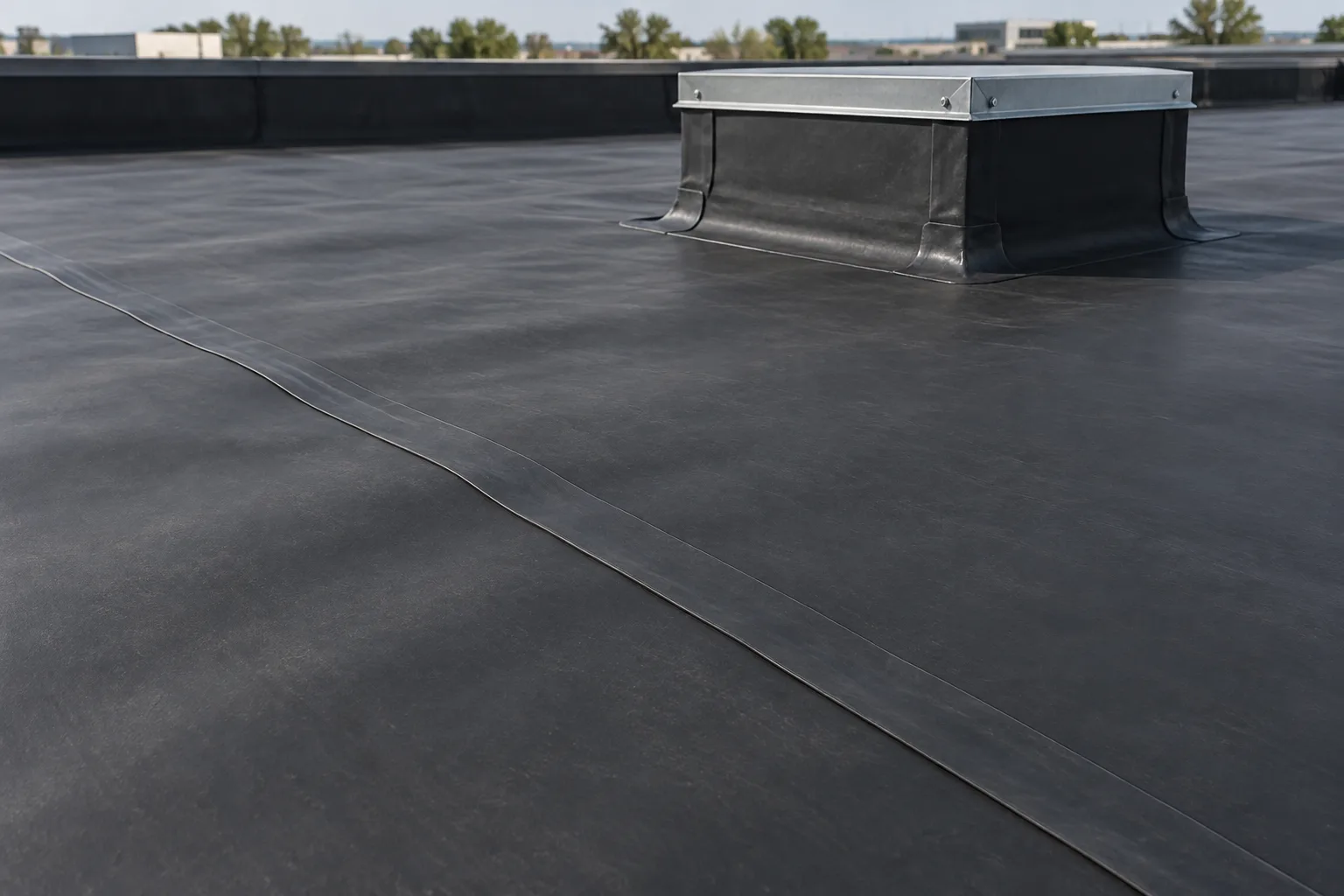
An open rubber-roof seam or a corner pulling away needs a repair suited to the membrane and the stress at that detail. EPDM decisions start with the sheet, its taped splices and the condition of the assembly below.
Free roof inspections. Clear repair and replacement options.
EPDM is a rubber membrane, and its sheet splices are made with compatible adhesive-tape details rather than the heat-welded field seams used on TPO. That difference matters when a leak has been patched several times with different materials.
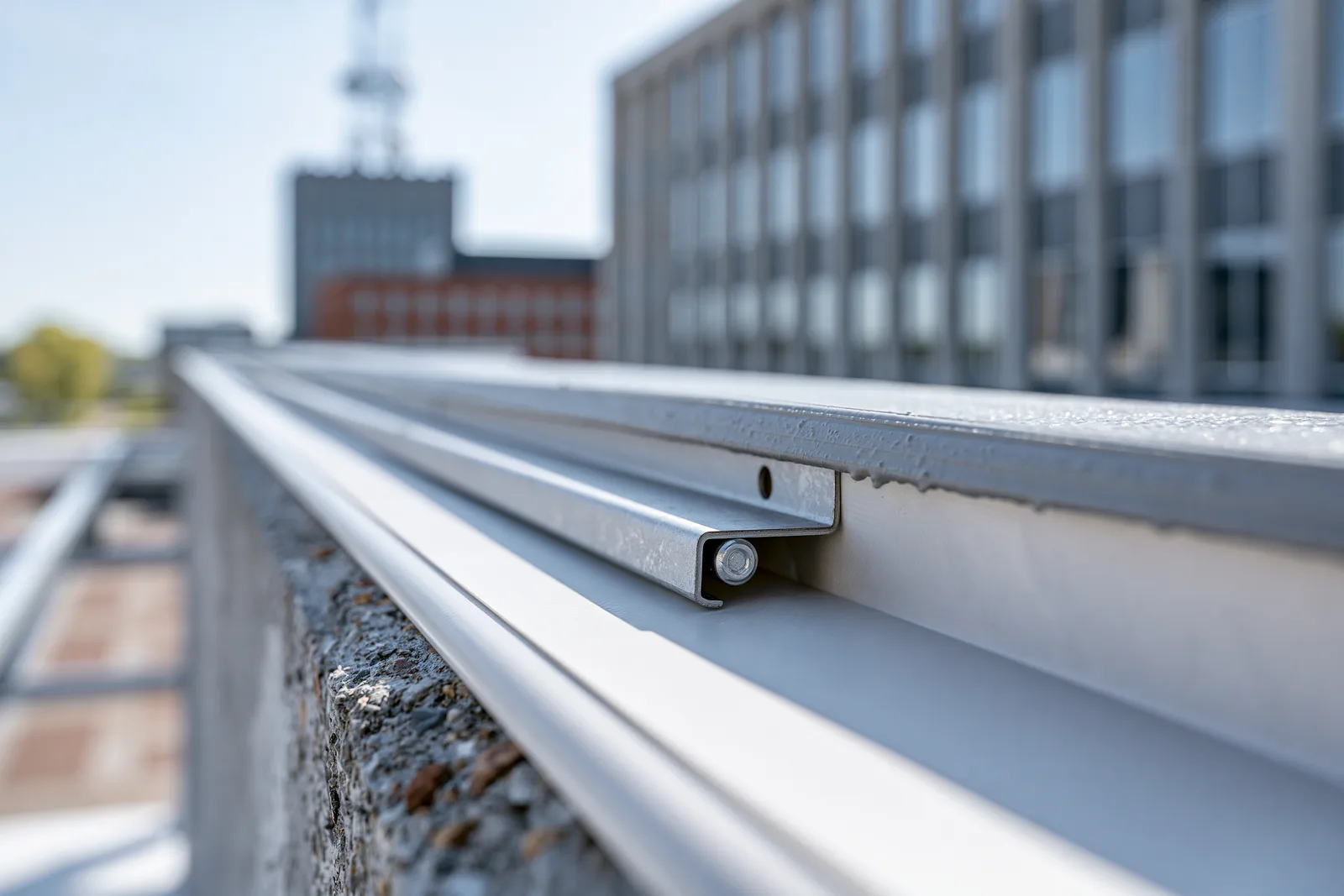
A seam repair needs sound membrane beyond the defect and the preparation required by the selected repair system. If an edge or corner is pulling tight, the repair also needs to address the condition creating that stress. Adding material over the top without resolving the connection leaves the same weak point in the assembly.
| Observed condition | What needs to be established |
|---|---|
| Opening along a splice | The existing membrane, splice and surrounding sheet condition determine the compatible repair boundary. |
| Puncture in the field membrane | The area beneath the opening needs assessment as well as a suitable membrane patch. |
| A tight or lifting curb corner | The flashing, restraint and attachment need attention. The work is not defined by the surface gap alone. |
| Loose edge or wall termination | The membrane connection and perimeter detail must work together, including the parts hidden by trim. |
| Soft area or moisture beneath the sheet | Wet or damaged layers can extend the work beyond a simple surface repair. |
A defined defect can be repaired when suitable surrounding membrane and a sound base remain. The repair method follows the actual system, not simply the color of the old sheet.
A contained area of wet insulation, damaged deck or failed attachment can call for deeper work. The new section must connect to the retained roof in a way that fits the assembly.
Broad deterioration, extensive hidden damage or a roof that cannot support a sound connection changes the project. The decision needs the existing conditions and drainage assessed before choosing another surface.
Review commercial roof choicesMoisture can be retained beneath a membrane even after the exposed surface has dried. Where the condition is uncertain, investigation appropriate to the assembly helps define how much material is affected. A coating or new sheet should not be used to hide that question.
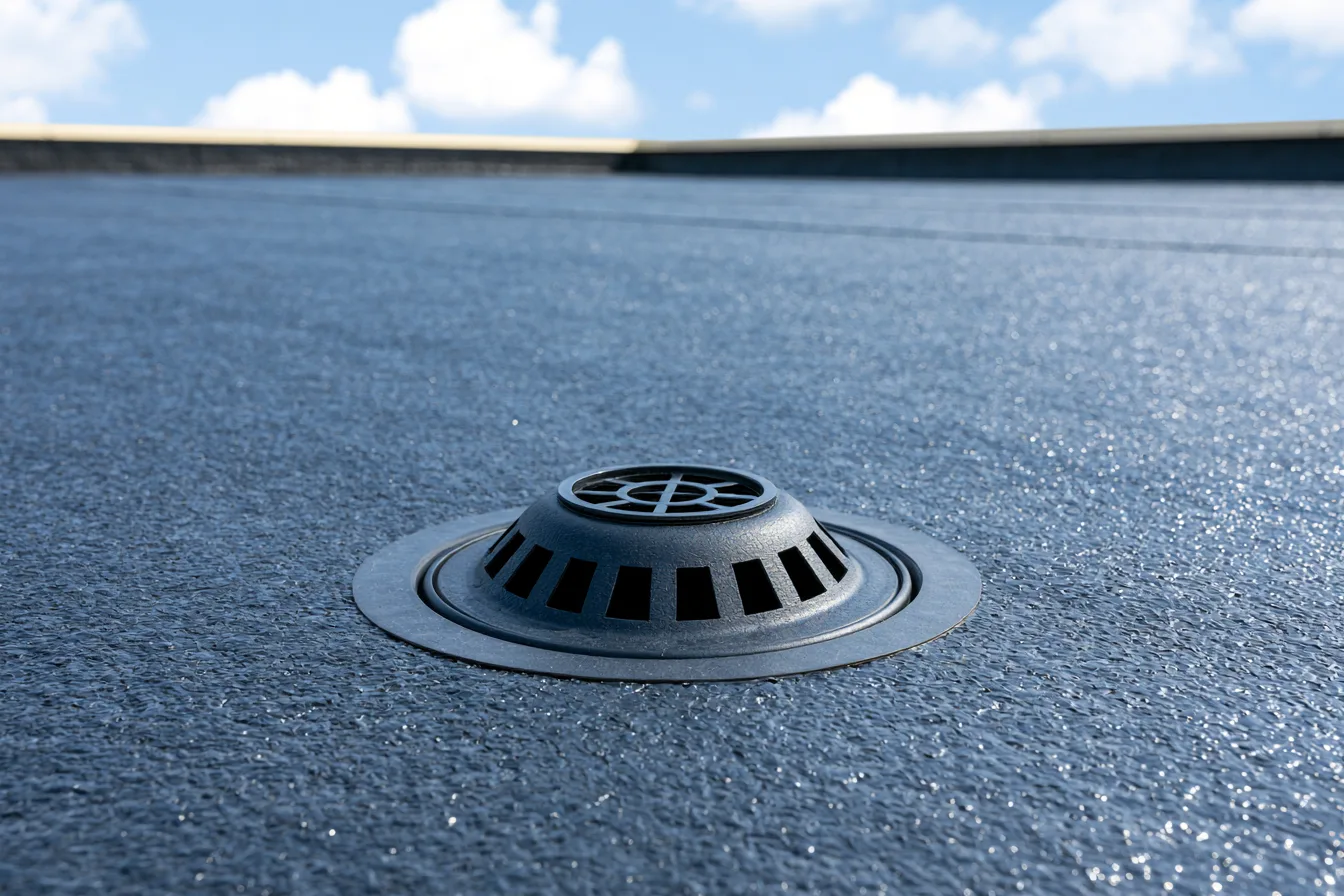
Drainage and rooftop access remain part of the work. A damaged drain connection, equipment-service route or wall edge can change the repair detail. Those conditions need their own answer rather than being treated as an EPDM brand or color choice.
No. Color alone does not identify the material. EPDM itself is available in black and white, and other roof products can have a dark surface. The system needs to be identified before a repair is selected.
EPDM rubber and TPO thermoplastic use different seam methods. A suitable repair needs the products and preparation specified for the actual membrane.
The TPO roofing page explains welded-seam decisions.
Not by itself. A contained seam failure in an otherwise suitable assembly can support a repair. The answer changes when the surrounding sheet, underlying layers or attachment are no longer sound.
Only a restoration system compatible with the actual membrane and condition should be considered. Preparation, adhesion and the condition of the layers below need to be established first.
Our roof-coating guidance explains the eligibility question.
Tell us whether the concern is a seam, a curb, a damaged area or a replacement decision. Include the address and any existing system information so the project can be matched to the work needed.
(405) 467-3350